

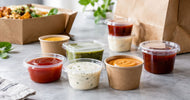
Sauce Containers for Takeaway Food: Best Picks 2026
, by Editorial Team, 16 min reading time
, by Editorial Team, 16 min reading time
Best overall for individual sauce portions: Sauce Tub with Hinged Lid – 2oz (1000/ctn). Best for larger dips: the 4oz hinged-lid tub; best for small plant-based portions: the 2oz sugarcane cup; best for sharing dips: the 4oz sugarcane cup. For lower ongoing packaging costs in 2026, choose sauce containers for takeaway food around your actual portions, lid requirements and packing routine—not capacity alone.
A sauce container is a small part of each order, but the buying decision affects portion control, packing work and the condition of the finished meal. A container that is larger than you need also gives staff more room to overfill it.
Valuepackperth’s 2oz hinged-lid sauce container is best for Perth takeaway operators packing individual sauce portions that fit that size. The attached lid keeps the closure with the tub; it does not remove the need to check the seal.
For your 2026 packaging review, assess the sauce and the main meal together. A good portion cup still needs a stable position inside the takeaway bag.
Use these criteria before comparing formats. The best choice is the smallest suitable container that works with your food, service routine and delivery setup.
For 2026 purchasing, separate essential requirements from preferences. A particular material is not a substitute for the correct portion size or a properly fitted lid.
The ranking below compares product formats, not suppliers. Each option has a different job, so the first choice is not automatically the right choice for every menu item.
| Ranked option | Best for | Standout feature | Key limitation |
|---|---|---|---|
| Sauce Tub with Hinged Lid – 2oz (1000/ctn) | Individual sauce portions | Attached lid; 1,000 tubs per carton | Limited room for larger portions |
| Sauce Tub with Hinged Lid – 4oz (1000/ctn) | Larger individual dips | Larger capacity with an attached lid | Unnecessary capacity for small portions |
| Sugarcane Sauce Cup – 2oz (2000/ctn) | Small plant-based portions | Sugarcane cup; 2,000 cups per carton | Matching lids are a separate product |
| Sugarcane Sauce Cup – 4oz (2000/ctn) | Sharing dips in plant-based cups | Larger sugarcane format | Separate cup and lid ordering requires attention |
The 2oz hinged-lid tub combines the sauce container and its closure in one item. The supplied product listing specifies 1,000 tubs per carton. Start here when your standard individual portion fits comfortably below the closing rim.
An attached lid removes the separate lid-matching step from purchasing. Your staff still need to fill neatly and check the closure before adding the tub to an order.
2oz hinged-lid tub pros:
2oz hinged-lid tub cons:
Best for: Individual dipping sauces and dressings where the planned serving fits a 2oz container.
Do not fill to the rim simply because the tub allows it. Establish a consistent serving amount and leave the closure area clean.
Verdict: Buy for standard individual portions after checking food suitability and testing the closure with your sauce.
The 4oz hinged-lid tub provides more capacity while retaining an attached closure. It is supplied in cartons of 1,000. Choose this format when your intended individual serving genuinely exceeds what the smaller tub accommodates.
Keep the larger tub assigned to specific menu items. Making it the default for every condiment creates room for inconsistent portions without solving a packing problem.
4oz hinged-lid tub pros:
4oz hinged-lid tub cons:
Best for: Generous individual dips or dressing portions that need the larger format.
Compare the filled tub against your usual bag and meal container. It should sit securely without being wedged against another lid or resting on an uneven surface.
Verdict: Buy for designated larger portions; skip as an automatic replacement for every 2oz tub.
The 2oz sugarcane sauce cup is a plant-based alternative to a plastic sauce container. The product listing specifies 2,000 cups per carton. A matching 2oz sugarcane sauce cup lid is listed separately, also in cartons of 2,000.
This is a purchasing decision about both material and packing format. Unlike a hinged tub, the cup requires staff to select and fit a separate closure.
2oz sugarcane cup pros:
2oz sugarcane cup cons:
Best for: Small sauce portions where choosing plant-based packaging is a defined business requirement.
Compare the complete cup-and-lid setup before ordering. Do not compare a bare cup against a hinged tub and treat them as equivalent finished packs.
Verdict: Buy when plant-based material is the priority and the matching cup-and-lid setup passes your service check.
The 4oz sugarcane sauce cup gives you a larger plant-based format for a dip served with a shared meal. The listing specifies 2,000 cups per carton. Its matching 4oz sugarcane lid is a separate product, supplied in cartons of 2,000.
Use the larger cup for a planned shared serving, rather than asking staff to guess how much extra sauce a group needs. Assign the format to the relevant meal or add-on.
4oz sugarcane cup pros:
4oz sugarcane cup cons:
Best for: Sharing dips where your packaging brief calls for a plant-based cup.
Keep the matching lids clearly separated from smaller closures at the packing station. Staff should not have to guess which lid belongs on a filled cup.
Verdict: Buy for defined sharing portions; skip for small individual serves.
Valuepackperth’s sauce containers include hinged-lid tubs and separate sugarcane cups. Compare the formats against the same portion and packing requirements, then check current product information before committing to a wholesale order.
A closure check on an empty container is not enough. For your 2026 selection, use the sauce, portion and bag arrangement that staff will handle during service.
Fill the candidate container with your intended serving. Check that the sauce stays below the closing area and that staff can repeat the portion without filling by eye alone.
For a chunky dip, check the fit with the food itself. A nominal capacity does not tell you how conveniently staff can fill or customers can use the container.
Close the filled container using your normal packing method. Inspect the rim, hinge or separate lid for incomplete engagement, and check whether sauce on the rim interferes with closing.
Do not call a container leakproof because it closes neatly once. Record what happens with your sauces under your normal handling conditions.
Place the sauce beside the meal in your usual takeaway bag. Check that it sits upright and that other containers do not press against its closure.
Repeat the check with your typical collection and delivery arrangements. Keep the exercise separate from food-safety controls; use safe handling and do not serve test portions to customers.
Ask the staff who pack orders to fill and close the candidate format. Check whether separate lids are easy to identify and whether the containers fit the space you actually have.
Then write down which container belongs with each menu item. A clear rule is more useful than leaving several sizes at the bench without instructions.
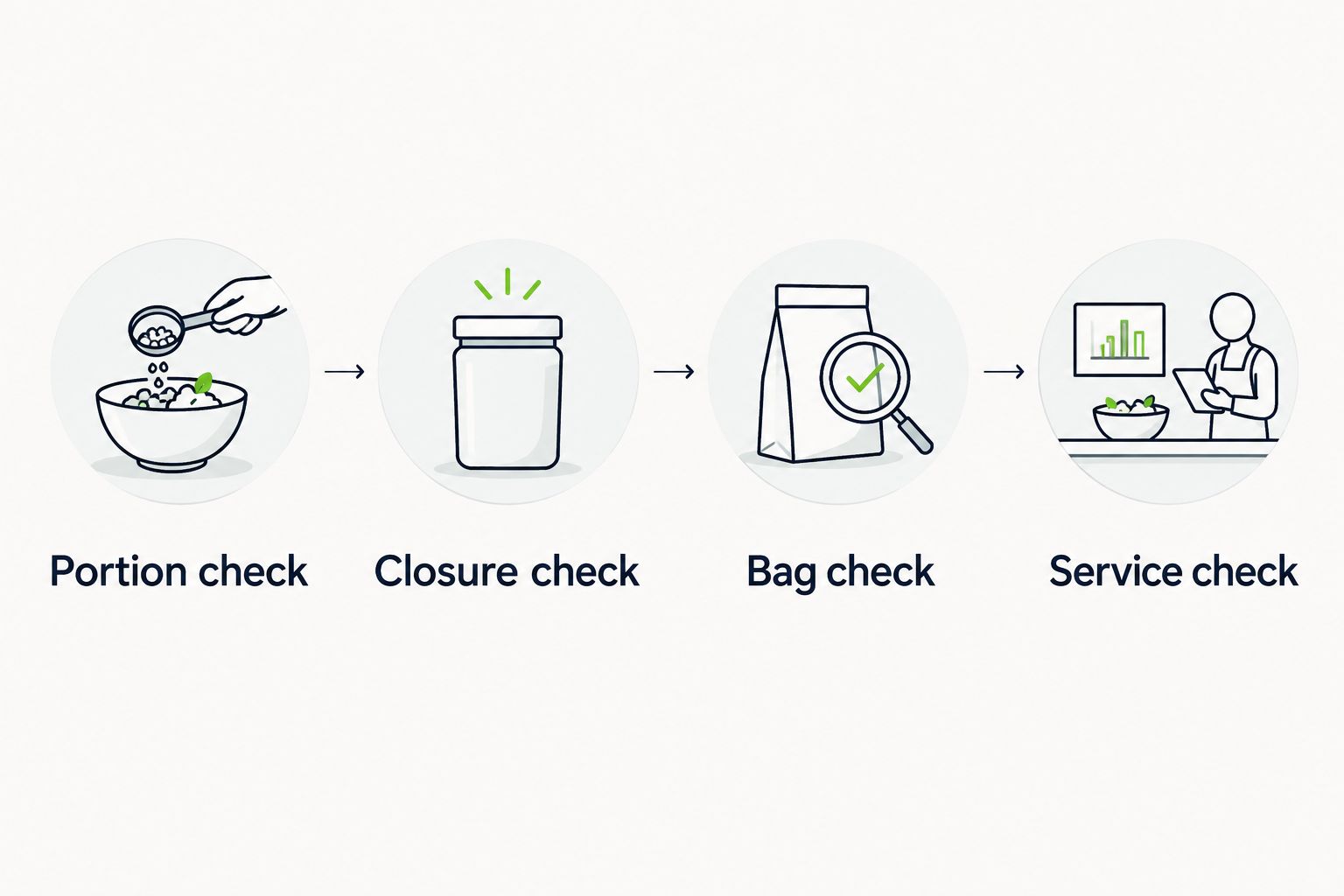
Start with the complete finished pack. For a hinged tub, the closure is attached. For sugarcane cups, count the matching lid as part of the packaging requirement.
Then compare portion consistency, damaged or discarded packaging, and the number of formats staff need to manage. These are operational checks, not a reason to assume one material always costs less.
Standardise by menu item, not by guesswork. Keep a smaller default portion where it fits, and reserve the larger container for meals that require it.
Before your next 2026 wholesale order, give Valuepackperth the sauce type, serving temperature, intended portion and preferred material. Ask for confirmation of suitability and the matching closure rather than requesting a generic sauce cup.
This ranking prioritises portion fit, closure handling, food suitability, complete-pack cost and packing practicality. The 2oz hinged-lid format is the default because it combines a small individual portion format with an attached closure—not because of an unsupported performance claim.
The other formats earn separate places for larger individual portions, small plant-based portions and shared plant-based dips. Select the use case first, then assess the product.
Choose the 2oz hinged-lid tub for individual portions that fit. Move to the 4oz hinged-lid tub for a defined larger serving, or choose the corresponding sugarcane format when plant-based material is your priority.
For 2026, the practical buying rule is unchanged: confirm food suitability, test the filled pack and order the complete closure setup. Valuepackperth’s wholesale sauce-container options let Perth operators compare these formats without turning the decision into a supplier ranking.
What's the best sauce container for takeaway food?
A 2oz hinged-lid tub is the default choice for individual sauce portions that fit comfortably inside it. Choose a larger or plant-based format when your portion or material requirements call for one, and check food suitability before ordering.
Should I choose a 2oz or 4oz sauce container?
Choose 2oz for a smaller individual portion and 4oz for a planned larger serving. Test your actual portion below the closing rim rather than treating the stated capacity as a filling target.
Are hinged-lid sauce tubs better than separate cups and lids?
Hinged-lid tubs are better when keeping the closure attached is your priority. Separate sugarcane cups and lids provide a plant-based option but require matching, ordering and storing both components.
Can I put hot sauce in any takeaway sauce container?
No—confirm that the specific container and lid suit your sauce temperature before use. Capacity and lid style do not establish heat suitability.
Are sugarcane sauce cups automatically compliant in WA?
No—do not treat the material name alone as proof of compliance. Check the specific product against current WA requirements and confirm its disposal instructions before making claims to customers.
How many sauce containers come in a wholesale carton?
The listed hinged-lid sauce tubs come in cartons of 1,000, while the listed sugarcane sauce cups come in cartons of 2,000. Matching sugarcane lids are listed separately in cartons of 2,000.
How do I stop sauce containers leaking during delivery?
Use a suitable container, keep the closing rim clean and check that the lid is fully engaged. Test the filled container in your usual bag arrangement; no closure style alone guarantees a spill-free order.
Check the packed meal, not just the sauce tub. A container can close correctly on the bench but sit awkwardly beside the main meal once everything goes into the bag.
Before placing your order, pack the entire takeaway as staff would during service. If the sauce needs a different position or portion format, fix that before buying the carton.


