

Takeaway Containers for Salads and Cold Food: Best 2026
, by Editorial Team, 15 min reading time
, by Editorial Team, 15 min reading time
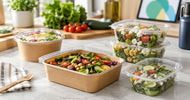
Best overall: a 750ml paper takeaway container. Best for bulky leafy salads: a 1000ml paper container. Best for small cold sides: a 500ml paper container. For takeaway containers for salads and cold food in 2026, reduce unnecessary packaging spend by matching the container to the portion, then checking the lid with your actual food.
Your packaging choice affects more than the purchasing invoice. A container that crowds the food, needs an improvised closure or takes extra handling creates problems at the bench and at handover.
For your 2026 menu, start with the portion you actually serve. Buy the smallest suitable container that closes without compressing the food.
| Container | Best for | Standout feature | Key limitation |
|---|---|---|---|
| 750ml Paper Takeaway Container | Regular lunch portions | 750ml capacity; listed for hot and cold use | Bulky leaves and toppings need a portion-fit check |
| 1000ml Paper Takeaway Container | Bulky leafy salads | 1000ml capacity; listed for hot and cold use | Unnecessary space for small portions |
| 500ml Paper Takeaway Container | Small cold sides | 500ml capacity; listed for hot and cold use | Not the default for a large leafy lunch |
| Kraft Food Tray #3 | Immediate counter service | Open serving format; 180 × 134 × 45mm | An open tray does not provide a closed takeaway pack |
These recommendations separate four serving jobs rather than treating every container as interchangeable. Capacity helps you shortlist a pack; it does not establish how much of your particular salad will fit.
A 750ml paper takeaway container is the starting point for a regular cold lunch portion. The listed product supports hot and cold use and comes in a carton of 600 containers.
Start here for a mixed salad or grain-based lunch, then fill it using your normal serving utensils. Check the complete portion, including toppings, rather than judging the empty container at the packing bench.
750ml paper container pros:
750ml paper container cons:
Best for: a café's regular cold lunch portion, subject to a filled-pack check.
For 2026 purchasing, make this your baseline sample. If the lid presses into the food or staff need to rearrange every portion to close it, move up a size rather than changing the serving routine around the packaging.
Verdict: Buy for regular portions once the filled container and matching lid pass your service check.
The 1000ml paper takeaway container gives you more capacity for a salad built around loose leaves and substantial toppings. Its listing states hot and cold use, with 600 containers per carton.
Use this option when the intended portion needs room rather than simply because it is the largest paper container in this shortlist. Fill it with the same salad you sell, close it and check that the presentation survives normal handling.
1000ml paper container pros:
1000ml paper container cons:
Best for: leafy lunch salads that crowd a smaller paper container.
Do not use extra container capacity as a reason to increase the serving unintentionally. Keep the menu portion consistent, then select the pack that protects it from compression.
Verdict: Buy for bulky salads; skip it as the automatic choice for every cold item.
Valuepackperth supplies paper takeaway containers for salads and cold food in these listed capacities. Compare the 750ml and 1000ml formats against your regular lunch portion before choosing your wholesale order.


The 500ml paper takeaway container is the smaller closed-container option in this shortlist. Its listing identifies a rectangular paper format for hot and cold use, supplied in cartons of 600.
Shortlist it for small side salads and compact cold portions. Use your normal portion as the test: a dense side and a loose leafy salad occupy space differently, even when staff consider both a small serve.
500ml paper container pros:
500ml paper container cons:
Best for: small cold sides that fit comfortably beneath the closure.
Keep the smaller format only if your menu gives it a clear job. A size used for a single rarely ordered item adds another purchasing decision without necessarily simplifying service.
Verdict: Buy for a defined side portion; skip it for salads that need rearranging to fit.
Kraft Food Tray #3 is an open serving tray measuring 180 × 134 × 45mm. The supplied product information lists 250 trays per carton.
Consider this format for a cold item handed directly to a customer for immediate eating. It is a different serving choice from a lidded takeaway container, not a replacement for one in a packed delivery order.
Kraft Food Tray #3 pros:
Kraft Food Tray #3 cons:
Best for: immediate counter service where a closed pack is not required.
Do not select an open tray merely to avoid checking lid compatibility. Choose it because the customer's eating occasion suits an open serving format.
Verdict: Buy for immediate service; skip as a standalone delivery pack.
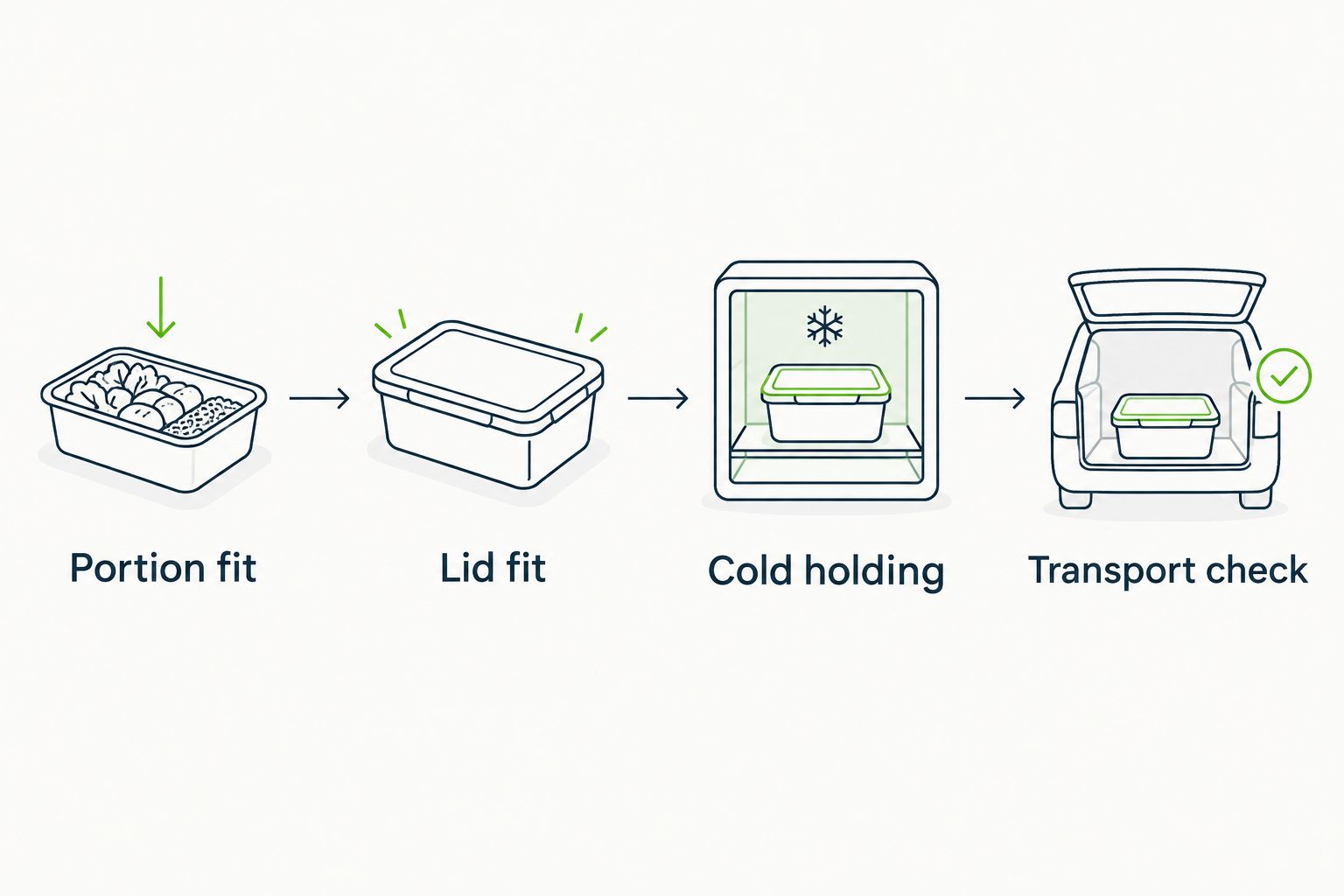
A useful 2026 packaging check follows the same path as a real order. Test the food, closure, storage and handover together rather than approving the container while it is empty.
Prepare the normal menu portion with its full toppings. Close the container without pushing down on the food, and check whether staff can repeat the process without changing the serve.
Ask for the exact matching lid reference. The supplied paper-lid listings describe compatibility with 500ml–1000ml rectangle bowls, but you should confirm the intended container-and-lid pairing before ordering cartons.
Place the packed food in your normal chilled-storage setup. Inspect the container, closure and presentation when you would usually hand the order to a customer; this checks your actual use rather than an assumed material performance.
Pack the order in the bag you normally use and handle it as your staff would. Check closure, stacking and presentation, and assess dressed food separately from undressed food.
Once a format passes the service check, record its exact product reference alongside the matching lid. Include the carton quantity and the menu items it serves so another staff member can reorder without guessing.
For Valuepackperth wholesale enquiries, describe the food and serving occasion first. A request for a container for a bulky leafy lunch gives more useful context than a request for the cheapest salad box.
Use this short purchasing brief:
For custom-packaging enquiries, settle the container format before discussing artwork. A branded pack still needs to fit the food and work at the bench; changing the format afterwards means revisiting the packaging brief.
This 2026 shortlist ranks the listed formats by portion fit, closure requirements, service format and ordering simplicity. The 750ml paper container leads as a starting point for regular lunch portions; the other options each serve a different job.
Capacity, dimensions and carton quantities come from the supplied product information. A listing is not a transport test: closure performance, wet-food suitability and presentation need checking with your own menu.
Choose a 750ml paper container first, then change size only when your portion requires it. Move to 1000ml for bulky leafy salads, down to 500ml for small sides, and choose an open kraft tray only for immediate service.
Valuepackperth is a wholesale takeaway-packaging supplier for Perth cafés, restaurants and food businesses. Bring a clear portion and service brief to the enquiry so the container and lid can be considered together.
Before updating your 2026 packaging order, also confirm the current WA requirements for the exact item. Material names alone do not establish legal suitability or disposal instructions.
What's the best takeaway container for salads and cold food?
A 750ml paper takeaway container is the starting recommendation for a regular cold lunch portion. Choose 1000ml for bulky leafy salads or 500ml for small sides, then check the matching lid with your actual food.
Is a 750ml container big enough for a lunch salad?
Choose 750ml only when your normal lunch portion fits beneath the lid without compression. Loose leaves and substantial toppings need a filled-pack check rather than a decision based on capacity alone.
When should I choose a 1000ml salad container?
Choose a 1000ml container when a bulky salad crowds the smaller format. Keep the intended menu portion unchanged and check that the closure does not press into the toppings.
Can I use a 500ml paper container for cold sides?
A 500ml paper container is the shortlist choice for small cold sides. The supplied listing states hot and cold use, but the complete pack still needs checking with your food and matching lid.
Are kraft trays suitable for takeaway salad delivery?
An open kraft tray is not a closed delivery pack. Use the listed tray for immediate service where appropriate, and choose a suitable closed container for a packed takeaway order.
Do the same paper lids fit every container size?
Confirm the exact pairing before ordering. The supplied paper-lid listings describe use with 500ml–1000ml rectangle bowls, but capacity alone is not enough to identify the correct lid.
Does sugarcane or paper automatically mean WA-compliant packaging?
No, a material name alone does not establish compliance for a particular item. Confirm the current WA requirements and the exact product details before changing your packaging.
What should I include in a wholesale packaging enquiry?
Include the menu item, normal portion, service format and intended closure. Ask Valuepackperth to confirm the product references, carton quantities and current ordering conditions before committing.
Keep an approved, empty container-and-lid pair at the packing bench as a reference. Store its product details with your reorder information so staff can compare a new delivery against the format you selected.
A container can be the right size and still be the wrong pack. The closure belongs in the buying decision from the start.