

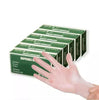
Glove Sizes for Food Handling: Vinyl vs Nitrile Guide
, by Paul Slee, 5 min reading time
How to choose disposable glove sizes for food handling, how vinyl and nitrile compare, and what Australian food rules say about glove use.
Disposable gloves are a small line item, but the wrong size or the wrong material slows staff down and leads to torn gloves mid-task. This guide covers how to pick a glove size, how vinyl and nitrile compare, and what the food rules say about glove use in a cafe, bakery, takeaway, butcher or catering kitchen.
| Size | Material | Carton | Item page |
|---|---|---|---|
| Small | Vinyl, powder-free | 1000/ctn | Vinyl Gloves – Small |
| Medium | Vinyl, powder-free | 1000/ctn | Vinyl Gloves – Medium |
| Large | Vinyl, powder-free | 1000/ctn | Vinyl Gloves – Large |
| Extra Large | Vinyl, powder-free | 1000/ctn | Vinyl Gloves – Extra Large |
See the full range on the gloves page.
Most glove size guides measure hand circumference. Wrap a soft tape around the knuckles with the fingers together, leaving the thumb out. Use the larger hand. Size charts differ between makers, so treat any chart as a starting point and check the fit on the job.
Most kitchens need more than one size. A simple approach is to stock Medium and Large as the main sizes, then add Small or Extra Large if staff have asked for them. Ask staff which size they use at home or in past jobs, and let new starters try a couple of gloves before you settle on a number. Keep each size in its own labelled spot so people do not grab the nearest box.
Both materials are used in food service. The difference is mostly about strength, fit and how long the glove stays on.
| Vinyl | Nitrile | |
|---|---|---|
| Fit | Looser, less stretch | Closer fit, more stretch |
| Strength | Tears more easily under strain | More resistant to punctures and tears |
| Typical use | Quick, low-risk tasks with frequent changes | Longer wear, precise or rougher tasks |
Vinyl is commonly chosen for short tasks where gloves are changed often. Think making sandwiches, plating, serving at the counter, portioning baked goods or filling rolls. If gloves come off every few minutes anyway, a looser glove is rarely a problem.
Industry guides point to nitrile for longer wear and for tasks with more strain on the glove, such as boning, trimming or handling items with sharp edges. Some glove makers also limit vinyl use with fatty or oily foods, so check the maker's food-contact information for the glove you buy. Our current range is vinyl. If you need something else, contact us.
Australia's Food Standards Code (Standard 3.2.2) applies to all food businesses, including in WA. A few points are worth knowing.
What glove size do most people wear?
It varies across a team. Many kitchens stock Medium and Large as the main sizes and keep Small and Extra Large for staff who need them. Measuring around the knuckles is the quickest way to check.
Are vinyl or nitrile gloves better for food handling?
Neither is better for every job. Vinyl is commonly used for quick tasks with frequent glove changes. Nitrile is often chosen for longer wear and tougher tasks.
Do food handlers have to wear gloves in WA?
The Food Standards Code does not require gloves. It does require good hand hygiene, and WA Health advises using tongs or gloves rather than bare hands for ready-to-eat food where possible.
How often should gloves be changed?
Change them when switching tasks, between raw and ready-to-eat food, after handling money or rubbish, and whenever a glove is torn or dirty.
Valerie is an AI assistant. Chats are saved so the team can follow up. Rather talk to us? Call or text 0495 043 319.