


Compostable Coffee Cups for Cafes: Best Picks 2026
, by Editorial Team, 15 min reading time
, by Editorial Team, 15 min reading time
Best overall: a certified industrially compostable cup accepted by your café’s collection service. Best for home-composting customers: a certified home-compostable cup. Best small-drink and large-drink candidates: 8oz and 16oz single-wall cups, respectively, once their compostability is verified. This 2026 guide helps you reduce ongoing packaging costs without confusing a paper cup with a compostable one.
Your cup choice affects more than the carton bill. You also need a lid that fits, a cup customers can hold comfortably and disposal instructions your staff can explain without guessing.
Valuepackperth is a wholesale coffee-cup supplier for Perth cafés buying cups and lids together. Start with Valuepackperth for wholesale packaging enquiries, then request the documentation relevant to the exact cup you intend to order.
For your 2026 buying decision, separate two questions: does the packaging work for your drinks, and does its compostability claim match the disposal route? A cup that passes only one check is not a finished purchasing decision.
Judge every option against these criteria before comparing carton quantities:
AS 4736 addresses plastics suitable for industrial composting and other microbial treatment. AS 5810 addresses plastics suitable for home composting. Use the relevant Australian standard when checking a supplier’s claim, and confirm that the certificate covers the finished item you are buying.
This is a product-selection ranking for Perth café operators in 2026, not a named-supplier comparison. Certification and collection acceptance determine the environmental recommendation; cup size determines the service recommendation.
| Ranked option | Best for | Standout feature | Key limitation |
|---|---|---|---|
| Certified industrially compostable cup | Cafés with an accepting collection service | Documented industrial compostability | Needs a suitable collection and processing route |
| Certified home-compostable cup | Customers using suitable home compost systems | Documentation for home-composting conditions | Does not establish acceptance in a council bin |
| 8oz single-wall coffee cup | Small takeaway drinks | Listed 90mm format; 1,000 cups per carton | Single-wall construction does not establish compostability |
| 16oz single-wall coffee cup | Large takeaway drinks | Listed 90mm format; 1,000 cups per carton | Size and lid fit still need a service check |
The first two options describe certification categories. The last two are specific wholesale cup candidates, not verified compostable recommendations. Apply the same documentation checks before adding either to your compostable packaging range.
A certified industrially compostable cup is the default choice when your café has a collection service that explicitly accepts it. The certification addresses processing under industrial composting conditions; it does not mean the cup belongs in every organics bin.
For 2026 orders, ask your collector about the exact cup, lining and lid. Keep the acceptance information with your supplier documents so staff receive one consistent instruction.
Certified industrially compostable cup pros:
Certified industrially compostable cup cons:
Best for: Cafés collecting takeaway packaging through an accepting commercial service.
Verdict: Buy when certification and collection acceptance both cover your chosen packaging. Skip the environmental claim if you cannot substantiate it.
A certified home-compostable cup suits a café whose customers want packaging intended for suitable home composting conditions. Look for documentation relevant to the finished cup and distinguish it from industrial compostability.
Do not turn that claim into a promise about council collection. Your customers still need instructions that match their actual disposal arrangements.
Certified home-compostable cup pros:
Certified home-compostable cup cons:
Best for: Cafés serving customers who use suitable home compost systems and understand the disposal instructions.
Verdict: Buy for a documented home-composting use case. Do not select it solely because the word compostable sounds reassuring.
Valuepackperth lists an 8oz single-wall coffee cup with a 90mm format and 1,000 cups per carton. It is a practical size candidate for small takeaway drinks when it matches your recipe and serving expectations.
Treat the construction, capacity and carton quantity as separate from compostability. Before making a compostable claim, obtain the cup’s lining details and relevant finished-product documentation.
8oz single-wall coffee cup pros:
8oz single-wall coffee cup cons:
Best for: Cafés selecting a small wholesale coffee cup and checking its suitability before switching packaging.
Verdict: Hold until certification, lid fit and drink handling are confirmed. Buy it as a compostable option only after those checks support that description.
Valuepackperth lists a 16oz single-wall coffee cup with a 90mm format and 1,000 cups per carton. Choose this size around an established large-drink recipe, not as a replacement for every cup on your menu.
The listed 8oz and 16oz cups share a 90mm format. That gives you a reason to investigate a common lid, but not permission to assume every lid will seal correctly.
16oz single-wall coffee cup pros:
16oz single-wall coffee cup cons:
Best for: Cafés maintaining a distinct large takeaway drink size.
Verdict: Hold until the full cup-and-lid combination passes your checks. Do not describe the cup as compostable based on its paper appearance.
A compostable cup paired with an unsuitable lid is an incomplete packaging decision. The supplied range includes a 90mm sugarcane coffee cup lid, listed as open/no sip hole, with 2,000 lids per case.
Check that lid format against how customers drink and carry their coffee. Sugarcane describes the material; it is not a substitute for finished-product certification or collector acceptance.
Use this sequence before committing to a wholesale order:
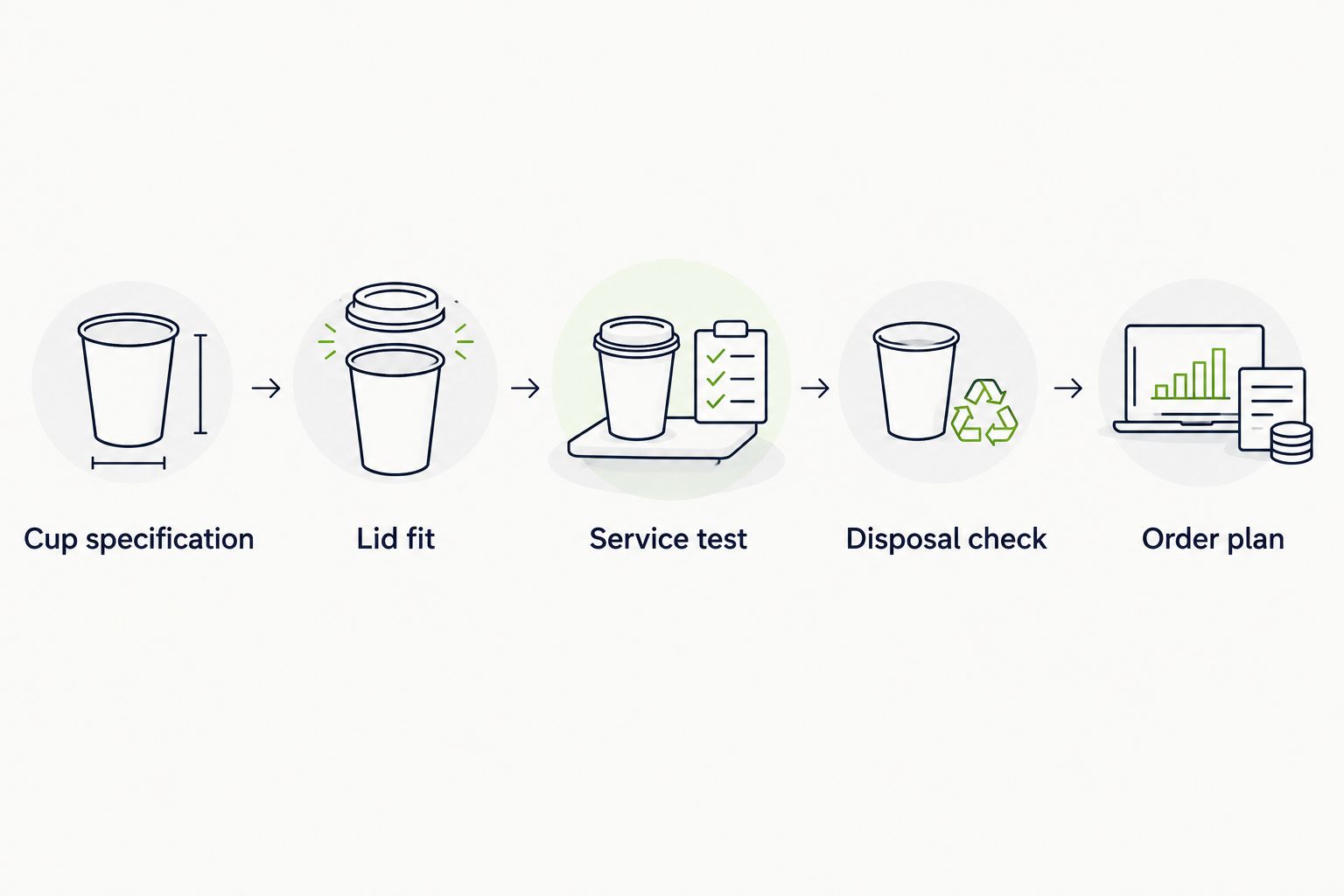
Keep a note of the products tested and the result. If you change either component, repeat the compatibility check rather than assuming the previous result still applies.
These two cups match the small- and large-drink use cases above. Compare them against your menu, then request the documentation needed before describing either as compostable.


Compare the complete serving setup, not cups alone. Include lids, any sleeves your service needs and packaging discarded because it fails your checks.
The listed cup cartons contain 1,000 cups, while the referenced sugarcane lid case contains 2,000 lids. If every drink uses a lid, those pack quantities represent different reorder intervals. Your actual usage changes when customers decline lids or you use the same compatible lid across multiple cup sizes.
Before requesting a 2026 wholesale quote, prepare a short buying brief:
For custom-branded packaging enquiries, settle the functional specification before discussing artwork. Include the cup size, intended use and disposal requirements in the enquiry so branding does not distract from the packaging decision.
The ranking puts verified compostability and an accepted disposal route ahead of appearance. Drink suitability, lid fit, carton planning and clear instructions follow because they determine whether the packaging works in daily café service.
The 8oz and 16oz cups occupy different menu roles, not competing environmental positions. Neither size earns a compostable recommendation from its capacity or single-wall construction.
Choose a certified industrially compostable cup by default when your collection service accepts the complete cup-and-lid combination. Choose a certified home-compostable cup when home composting is the specific customer use case you intend to support.
For Valuepackperth wholesale coffee cups, use the 8oz and 16oz formats as purchasing candidates and verify their documentation before making environmental claims. In 2026, the best choice is the cup that fits your drinks, works with its lid and has a disposal instruction you can defend.
What are the best compostable coffee cups for cafes?
The best compostable coffee cups for cafes have verified finished-product certification and a disposal route that accepts them. Match the size and lid to your drinks before ordering.
Are all paper coffee cups compostable?
No, a paper coffee cup is not automatically compostable. Check the lining and documentation covering the finished cup rather than relying on its appearance.
Is home-compostable better than industrially compostable?
Neither is automatically better; the right choice depends on the disposal route. Home-compostable and industrially compostable describe different processing conditions.
Can my Perth café put compostable cups in an organics bin?
Only put compostable cups in an organics bin when the service responsible for that bin explicitly accepts them. Check the cup and lid separately, even if both carry environmental claims.
Will a 90mm sugarcane lid fit any 90mm coffee cup?
Do not assume that matching 90mm descriptions guarantee a secure fit. Test the exact cup and lid together with your normal drinks before placing a bulk order.
Does a sugarcane lid make the whole coffee cup compostable?
No, a sugarcane lid does not establish compostability for the cup-and-lid combination. Each component needs appropriate documentation and acceptance by the intended receiving service.
Should I choose 8oz or 16oz coffee cups?
Choose 8oz for a small-drink recipe and 16oz for a large-drink recipe when those sizes match your menu. Assess serving volume, customer expectations and lid compatibility before switching.
What should I ask before ordering wholesale compostable cups?
Ask for the exact cup specification, finished-product certification, matching lid details and carton quantities. Confirm the disposal route and service performance before committing to the order.
Write the disposal instruction before ordering the cup. If your team cannot explain where the used cup and lid should go, the packaging decision is not finished.
Keep the certificate, collector acceptance and tested lid combination together in your purchasing records. That gives the next person placing an order a specification to follow, not just a familiar-looking cup.