

Best chip boxes for fish and chip shops in 2026
, by Editorial Team, 15 min reading time
, by Editorial Team, 15 min reading time
Best chip boxes for fish and chip shops in 2026: Chip Box Kraft (500/ctn) for chips served straight from the counter; Snack Box Regular for a closed snack-box shortlist; Dinner Box for individual meals. Keep ongoing packaging costs down by choosing around your actual portions and handover method, rather than buying a different box for every menu item.
The lowest-cost purchasing decision starts with the box your team can use consistently. An unsuitable format adds extra handling: staff reach for another container, rearrange the food or add packaging that should not have been necessary.
For Perth takeaway operators planning wholesale orders in 2026, separate chips handed directly to customers from full meals carried away in bags. Those are different packing jobs. Start your closed-box shortlist with the Snack Box Regular, then compare it against the portions you actually sell.
Valuepackperth is a useful wholesale starting point for Perth operators comparing chip boxes and meal packaging. The buying decision still belongs at your packing bench, with your fish, chips, sauces and takeaway bags.
Use these criteria before choosing a carton. A familiar product name is not a substitute for a portion test.
This is a product-selection ranking, not a supplier ranking. Each option has a different job; a shared-meal box is not competing with an open chip box for the same order.
| Item | Best for | Standout selection point | Key limitation |
|---|---|---|---|
| Chip Box Kraft (500/ctn) | Counter-service chips and sides | Compact, open-top kraft paper format | No enclosed top for bagged transport |
| Snack Box Regular | Closed snack-box shortlist | A regular snack-box format to test against smaller orders | Product name does not establish portion capacity |
| Dinner Box | Individual fish-and-chip meal shortlist | Dinner-box format for assessing a complete meal | Fish length and closure clearance need checking |
| Family Dinner Box | Shared meal shortlist | A separately named family-meal format | A shared portion needs its own packing test |
| 900ml Sugarcane Clamshell | Capacity-based sugarcane shortlist | Listed 900ml capacity and clamshell format | Capacity does not establish usable fish length |
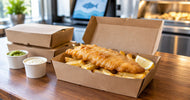
Chip Box Kraft (500/ctn) is a compact kraft paper box intended for hot chips, small snacks and takeaway sides. Its open-top design makes it straightforward to fill. That gives it a clear role where the customer receives the chips directly, rather than an enclosed meal inside a delivery bag.
Chip Box Kraft pros:
Chip Box Kraft cons:
Best for: Counter-service chips, small snacks and separate sides.
Test your regular chip serve in the box before standardising it across the menu. If staff need to mound chips above the opening, choose a different portion-format combination rather than treating the overflow as normal.
Verdict: Buy for direct-handover sides after confirming portion fit; skip as the default enclosed delivery container.
Snack Box Regular is the next format to assess when you want a snack box rather than an open chip box. Its name gives you a useful starting point for selection, but not a confirmed chip portion or meal capacity.
Use your standard snack order for the assessment. Fill the box as staff would during service, check the closure and put it inside the takeaway bag you normally use.
Snack Box Regular pros:
Snack Box Regular cons:
Best for: Operators shortlisting packaging for smaller bagged takeaway orders.
Do not assign every smaller menu item to this box automatically. A short fish portion, loose chips and a sauced snack occupy space differently, even when customers think of them as similar-sized orders.
Verdict: Hold until your normal snack portion passes a closed-box test.
Dinner Box is the format to assess for an individual fish-and-chip meal. The important question is whether your normal fish portion sits inside without folding, crushing the chips or obstructing the closure.
Set the meal out as you serve it, including any packaging for sauces. Test the complete order rather than checking the empty box and deciding it looks large enough.
Dinner Box pros:
Dinner Box cons:
Best for: Individual meals that need fish and chips assessed together.
For your 2026 packaging review, start with the meal you sell most often. Then test the menu item with the most awkward shape. A box that passes both checks is more useful than one chosen around an unusually tidy sample.
Verdict: Hold until your complete individual meal closes without pressure on the food.
Family Dinner Box gives shared orders their own assessment category. Do not choose it simply because the order includes more food: check how the fish, chips and any separate components are arranged together.
A family meal is also a handling test. Fill the box, close it and move it through the same handover routine staff use at the counter.
Family Dinner Box pros:
Family Dinner Box cons:
Best for: Shared meals that do not suit your individual-meal packing arrangement.
Keep wet accompaniments separate during the test. If one component changes the condition of another, changing the outer box alone does not solve the packing problem.
Verdict: Hold until a complete shared order passes both fit and handling checks.
The 900ml Sugarcane Clamshell gives you a stated capacity and material to compare against other formats. The listed pack contains 500 units. Those details help organise your shortlist, but they do not establish how a long piece of fish fits inside.
Use this option when you specifically want to assess a sugarcane clamshell. Check the usable shape, closure and food-contact information before assigning it to hot fish-and-chip orders.
900ml Sugarcane Clamshell pros:
900ml Sugarcane Clamshell cons:
Best for: Operators comparing a capacity-labelled sugarcane format with their usual boxes.
Avoid describing the packaging to customers as home-compostable, recyclable or accepted in a particular waste stream without supporting information for the exact item. Keep product selection and disposal claims as separate checks.
Verdict: Hold until portion fit, intended use and material information are confirmed.
Your best packaging check uses the food you sell and the routine your team follows. Keep the method consistent so you compare boxes rather than different meals or different handling conditions.
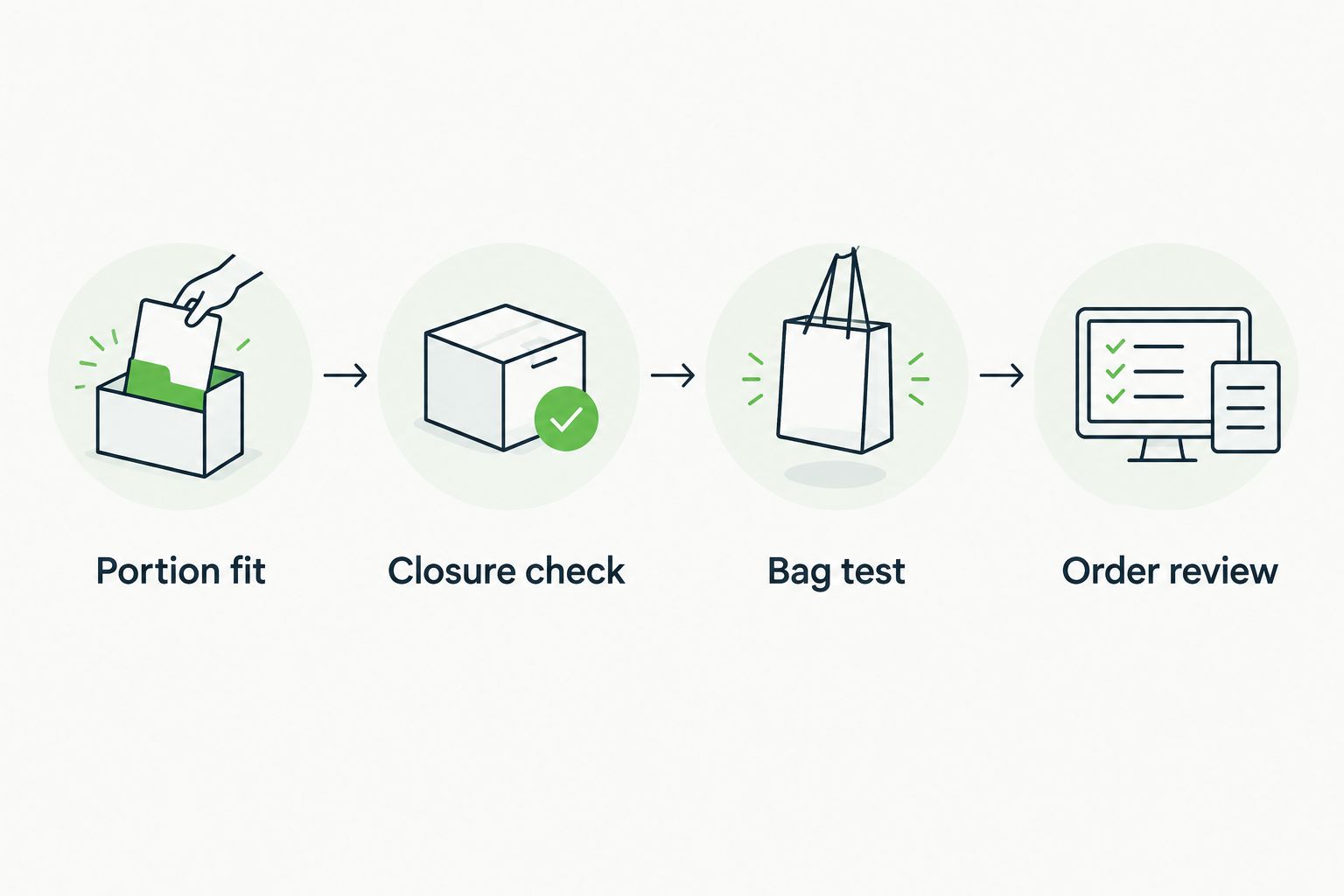
Ask staff to identify where they adjust the packing method. Repeated rearranging is a selection problem worth resolving before you order cartons. Keep notes by menu item so a box approved for chips is not quietly adopted for every meal.
Separate the menu into chips and sides, individual meals, and shared orders. These categories give you a practical starting point without assuming each needs a unique box.
Your 2026 range review should remove formats that duplicate a job without improving the packing result. Keep a separate size when it solves a clear problem: a fish portion that does not fit, an order that needs separation or a handover method that needs different containment.
For a Valuepackperth wholesale enquiry, provide the menu items, portion photographs, expected usage and current packing problems. For a custom-packaging quote request, settle the format first, then discuss the artwork. Printing does not correct a poor fit.
The 2026 ranking follows the criteria above: stated product purpose first, then portion fit, handover method and ordering simplicity. Chip Box Kraft takes the counter-service slot because its description explicitly identifies hot chips and sides; the other formats are shortlists for distinct packing jobs, not claims of tested performance.
Choose Chip Box Kraft for chips handed straight to customers. For bagged snack orders, start with Snack Box Regular; for complete meals, test Dinner Box before moving to a separate family format.
Choose the 900ml Sugarcane Clamshell when a capacity-based sugarcane comparison is part of your buying brief. For Valuepackperth chip boxes and meal packaging, the default decision is the format that passes your own portion and handover checks with the least extra packing.
What's the best chip box for a fish and chip shop?
Chip Box Kraft (500/ctn) is the clearest pick here for chips served directly from the counter. For bagged meals, assess a closed format against the full order rather than using an open side box by default.
Are open chip boxes suitable for delivery?
An open chip box is not an enclosed delivery container. Assess containment, bag handling and food condition before using one as part of a delivered order.
Should I use a snack box or a dinner box for fish and chips?
Choose between Snack Box Regular and Dinner Box by testing your actual meal, not by relying on the names. Check fish length, chip placement and closure clearance with the complete order inside.
Does a 900ml box fit a fish-and-chip meal?
A 900ml capacity does not establish whether your fish-and-chip meal fits. The usable length, depth and shape must suit the fish as well as the chips.
Are sugarcane chip boxes automatically compostable in Perth?
The word sugarcane does not establish acceptance in a Perth waste service or a particular composting system. Check the exact item's supporting information and the requirements of the disposal service involved.
What should I send when asking for a wholesale packaging quote?
Send your menu items, portion photographs, expected usage and preferred packing format. Include problems with your current boxes so the enquiry addresses fit and handling, not just a product name.
Should I order custom-branded boxes before testing the size?
Test the format before ordering custom-branded packaging. Confirm portion fit and closure first, then discuss artwork and the quote requirements.
The empty box is the least useful version of the box to assess. During your next 2026 ordering review, compare complete packed orders side by side. That reveals problems a product photograph or a capacity label cannot answer: food pressed against a lid, an awkward bag fit or an extra container added at the last moment.