

Food Packaging Online: A Perth Buyer's Guide
, by Paul Slee, 8 min reading time
, by Paul Slee, 8 min reading time
Buying food packaging online in Perth? Compare materials, sizes and use cases for cups, containers and takeaway boxes with this practical buyer's guide.
Buying food packaging online should be simple, but it rarely is the first time. You land on a supplier's site, get hit with dozens of cup sizes, three different container materials, and a bulk quantity you're not sure you can store. Then you order the wrong lids and end up back where you started. This guide is here to cut through that. If you run a cafe, food truck, bakery, restaurant or catering business in Perth, here's how to buy the right food packaging online without wasting money or time.
The obvious reason is convenience. Ordering online means you're not shutting the shop or sending a staff member across town during a service window. But there are practical advantages that matter more once you're running a real business:
The trade-off is you can't feel the product before you buy. That's exactly why understanding materials and sizes upfront matters, so you order right the first time.
Most food businesses in Perth need packaging across a handful of categories. Here's how to think about each one.
Hot cups and lids. Single or double-wall paper cups for coffee, tea and hot drinks. Single-wall usually needs a separate cup sleeve; double-wall is insulated on its own, so it's a better choice if you don't want to stock sleeves. The critical thing here is matching lids to cups by both brand and size. A lid that almost fits will pop off in a car cup holder, and that complaint lands on you, not the manufacturer.
Cold cups. Clear PET or PLA cups for iced coffee, smoothies, juices and cold drinks. PET is a clear plastic; PLA is a plant-based clear alternative that looks similar. If your customers care about sustainability, or you're in a council area pushing for compostable options, PLA is worth considering. Again, lids are size-specific, and straws (or straw-slot lids) need to match.
Takeaway containers. This is the widest category and where most people over-order the wrong thing. Options include:
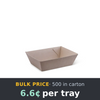
Clamshell boxes and burger boxes. For burgers, sandwiches, wraps and hot chips. Kraft clamshells are the standard for burger joints and food trucks because they're sturdy and vent steam so the food doesn't go soggy.
Cutlery, napkins and bags. The bits people forget until the order arrives. Wooden or PLA cutlery, paper or plastic carry bags, and napkins. Buy these in the same order to avoid a second delivery.
The material decision usually comes down to three questions: what food is going in it, how the customer will use it, and how much you want to spend. Here's a straightforward comparison.
Paper and kraft. Good for hot and dry food, looks natural and on-brand for cafes. Lined versions handle moisture and grease. Downside: not ideal for very saucy dishes over long periods, and lined paper isn't always straightforward to recycle.
PP plastic. Cheap, durable, microwave-safe and clear so customers can see the food. Ideal for meal prep, salads and anything reheated at home. Downside: it's plastic, which some customers and councils are moving away from.
Bagasse (sugarcane pulp). Compostable, sturdy, handles hot and cold, and looks clean and professional. A solid all-rounder if sustainability is part of your brand. Downside: usually costs a bit more than plastic.
PLA (plant-based plastic). Clear like PET but compostable. Great for cold cups and cold food where you want the see-through look without the plastic. Downside: it's heat-sensitive, so keep PLA cups away from hot drinks, and it needs commercial composting to break down properly.
Foil/aluminium. Best for oven use, catering trays and keeping food hot in transit. Downside: no microwave, and it's overkill for a simple takeaway lunch.
A quick decision shortcut: hot and dry, go kraft; hot and saucy, go bagasse or lined kraft; cold and clear, go PET or PLA; reheated at home, go PP; oven or catering, go foil.
The single most common ordering error is buying lids that don't match the cups or containers. Sizing across brands is not universal. A 12oz lid from one range will not reliably fit a 12oz cup from another. When you're ordering food packaging online, always buy cups and lids from the same product family, and check that a specific lid is listed as compatible.
For cups, the standard Australian sizes are roughly 8oz, 12oz and 16oz. Most cafes run 8oz for small coffees and 12oz for regular, with 16oz for large or iced drinks. If you're only going to stock two sizes, 8oz and 12oz cover the majority of coffee orders.
For containers, think in terms of portion, not just volume. A rice bowl, a salad and a curry all need different depths even if the volume is similar. If you can, order a small quantity of two candidate sizes first, run them through a real service, and see which one your actual portions fit before committing to bulk. It's cheaper than a pallet of the wrong box.
Also factor in stacking and storage. Bulk packaging takes up real space. Before you order ten cartons, work out where they'll live. Many Perth cafes and food trucks are tight on back-of-house room, and a delivery you can't store is a delivery working against you.
Plenty of national sites sell food packaging online, but there's a real advantage to buying from a supplier based in Perth. Freight from the eastern states adds cost and time, and if something's out of stock, you're waiting days for a replacement to cross the Nullarbor. A local WA supplier means faster metro delivery, easier communication when there's a problem, and stock that's actually held here rather than dropshipped from interstate.
When you're comparing suppliers, look at:
Value Pack Perth is a WA-based wholesale packaging supplier serving cafes, restaurants, bakeries, food trucks and caterers across Perth. That means the range is built for local food businesses, and you're dealing with people who understand how quickly a busy cafe burns through cups and containers.
Get those six things right and buying food packaging online becomes a five-minute job you barely think about, which is exactly how it should be.
Ready to sort your packaging? Browse the full range at valuepackperth.com.au to find cups, containers, clamshells and everything else your food business needs, with wholesale pricing and delivery across Perth and WA.